


Vegetable biryani is a flavourful Indian rice dish prepared with basmati rice, mixed vegetables, aromatic spices, fresh herbs and ghee. This homemade vegetable biryani recipe combines carrots, potatoes, green peas and beans with fragrant spices to create a delicious vegetarian meal.
Making veg biryani at home is easier than you might think. This recipe uses a pressure cooker to cook the rice and vegetables together, making it a convenient option when you want a satisfying homemade biryani without preparing several separate dishes.
The combination of whole spices, ginger, garlic, green chillies, mint and coriander gives the biryani its distinctive aroma. Serve it hot with cucumber raita, onion salad or your favourite pickle for a complete meal.
Why You’ll Love This Vegetable Biryani Recipe
-
Aromatic spices: Whole spices, biryani masala, mint and coriander give the rice a wonderful aroma.
-
Loaded with vegetables: Carrots, potatoes, beans and green peas make this a colourful vegetarian dish.
-
Easy pressure cooker method: Cook the rice and vegetables together without complicated layering.
-
Homemade flavour: Ghee, fresh herbs and spices create a delicious biryani at home.
-
Great for family meals: Serve it for lunch, dinner or special occasions.
What Is Vegetable Biryani?
Vegetable biryani is an Indian rice dish made with basmati rice, vegetables, whole spices and aromatic seasonings. It is a vegetarian variation of traditional biryani, which is prepared in different regional styles across India.
Basmati rice is commonly used because its long grains and natural aroma complement the spices. Vegetables such as carrots, potatoes, green peas, beans and cauliflower add colour, texture and flavour.
Traditional vegetable dum biryani involves layering partially cooked rice and vegetable masala before finishing the dish over low heat. This recipe uses a pressure cooker instead, making it a convenient one-pot version of vegetable biryani.
Ingredients for Vegetable Biryani
Rice and vegetables
- 1 cup basmati rice
- ½ cup carrot, peeled and chopped
- ½ cup potato, peeled and chopped
- ½ cup green peas
- ½ cup beans, chopped
- 1 large onion, thinly sliced
- 2 tomatoes, chopped
Whole spices
- 3 cloves
- 2 peppercorns
- 1 bay leaf
- 1-inch cinnamon stick
- 2 green cardamoms
- 1 small piece of mace (javithri)
- A small piece of nutmeg
Other ingredients
- 2 teaspoons cooking oil
- 2 teaspoons ghee
- 1-inch ginger
- 6 garlic cloves
- 2 green chillies
- ½ teaspoon red chilli powder
- ½ teaspoon turmeric powder
- 1 teaspoon biryani masala
- 1 tablespoon curd
- Fresh coriander leaves
- Fresh mint leaves
- Salt to taste
- 2 cups water
Ingredient note: Star anise appears in the original cooking instructions but not in the published ingredient list. Add it only if you actually use it in your tested recipe. Mace and javithri are the same spice, so they should not be listed twice.
How to Make Vegetable Biryani in a Pressure Cooker
Follow these steps to prepare aromatic homemade vegetable biryani using a pressure cooker.
Step 1: Wash and soak the basmati rice
Wash the basmati rice gently under running water until the water becomes relatively clear. Soak it in sufficient water for approximately 30 minutes.
After soaking, drain the rice and keep it aside. Soaking helps the rice cook more evenly and allows the grains to expand.
Step 2: Prepare the vegetables
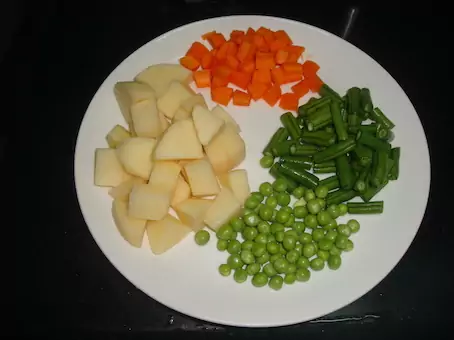
Peel and chop the carrots and potatoes into small, evenly sized pieces. Chop the beans, prepare the green peas and slice the onion.
Chop the tomatoes and green chillies. Prepare the ginger and garlic as a paste using the quantities listed above.
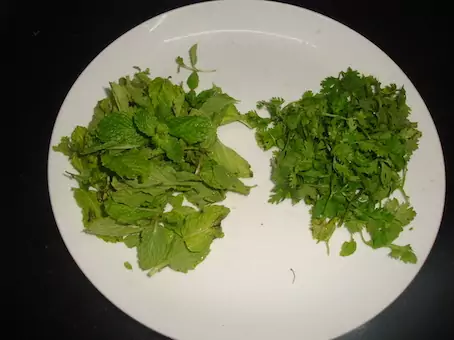
Wash and finely chop the fresh coriander and mint leaves.
Step 3: Fry the whole spices
Place a pressure cooker over medium heat. Add the cooking oil and ghee.
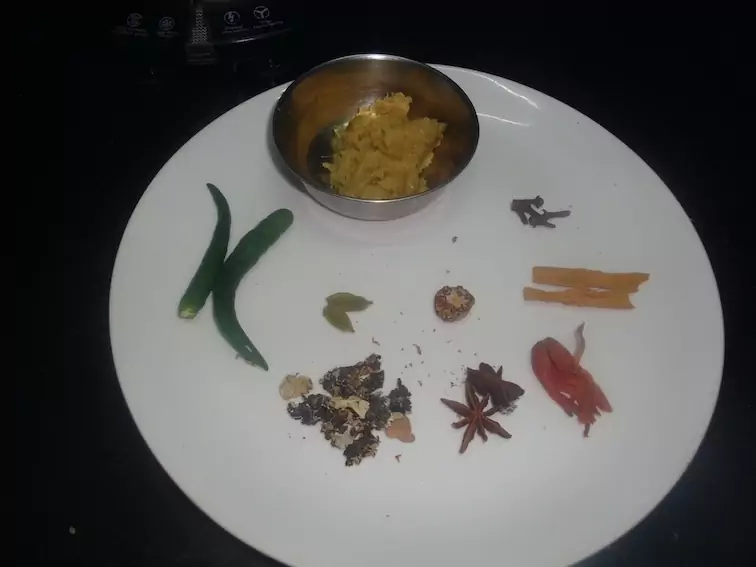
Once heated, add the cloves, peppercorns, cardamom, cinnamon, bay leaf, mace and nutmeg. Add the green chillies and sauté briefly until the spices release their aroma.
Avoid burning the spices, as this can affect the flavour of the biryani.
Step 4: Add onions, ginger and garlic
Add the sliced onions to the cooker and fry until they become soft and lightly golden.
Add the ginger-garlic paste and sauté for about a minute until its raw smell disappears.

Step 5: Add tomatoes and powdered spices
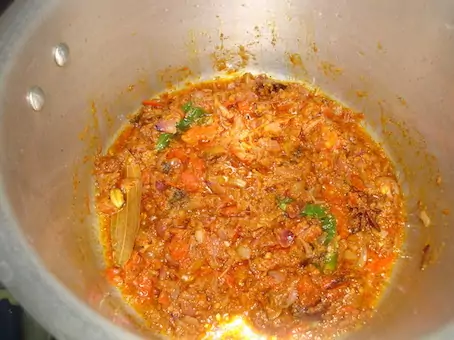
Add the chopped tomatoes and cook until they soften and blend with the onions.
Next, add the turmeric powder, red chilli powder, biryani masala and salt to taste. Mix well and cook for another minute.
Add the curd and stir until it is incorporated into the masala.
Step 6: Add the mixed vegetables
Add the chopped carrots, potatoes, beans and green peas to the cooker.
Mix everything well so that the vegetables are coated with the masala. Sauté for approximately 3 – 4 minutes.
Add the chopped coriander and mint leaves. These fresh herbs give the vegetable biryani a pleasant aroma.
Step 7: Add rice and water
Pour 2 cups of water into the cooker for 1 cup of basmati rice.
Bring the mixture to a boil. Add the drained rice and stir gently to distribute it evenly with the vegetables.
Allow the mixture to come to a boil again before closing the pressure cooker lid.
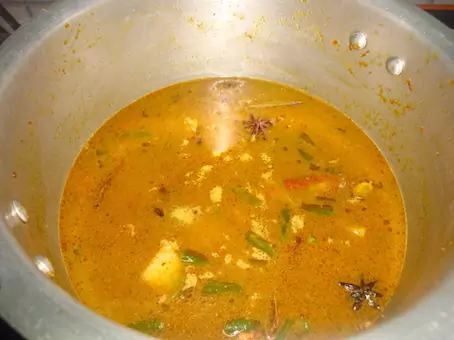
Step 8: Pressure cook the vegetable biryani
Close the pressure cooker lid securely and cook over medium heat for 2 whistles, following the original tested cooking method.
Switch off the heat and allow the pressure to release naturally before opening the cooker.
The rice should be cooked and the vegetables should be tender. Cooking time can vary depending on the cooker, heat level and rice variety.
Step 9: Serve hot
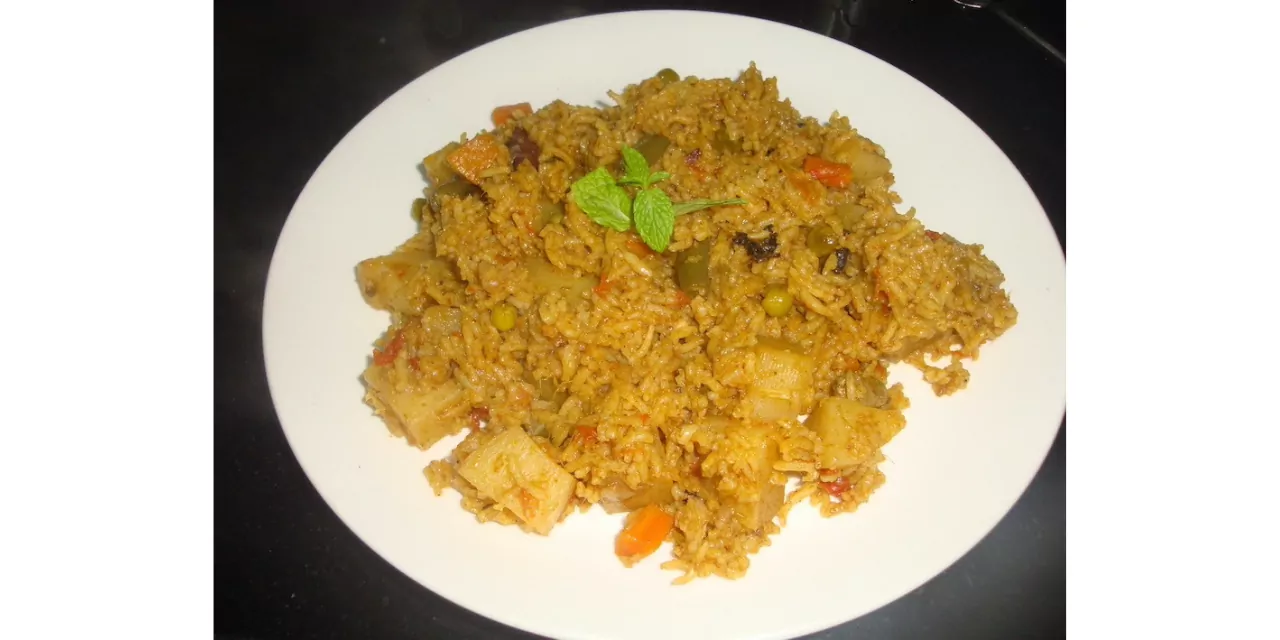
Open the cooker and gently fluff the vegetable biryani with a fork or spatula.
Avoid mixing vigorously because the basmati rice grains can break easily.
Garnish with fresh coriander and mint leaves. Serve hot with cucumber raita, onion salad or pickle.
Tips for Making Perfect Vegetable Biryani
A few simple techniques can help you prepare flavourful vegetable biryani with well-cooked rice.
- Choose good-quality basmati rice: Long-grain basmati rice gives the biryani its characteristic aroma and texture.
- Soak the rice: Soaking for around 30 minutes helps the grains cook evenly.
- Use fresh vegetables: Fresh carrots, potatoes, beans and peas provide better texture and flavour.
- Do not skip the whole spices: Cinnamon, cloves, cardamom and bay leaf contribute to the aroma.
- Use ghee: A little ghee adds richness and enhances the flavour of the biryani.
- Cook the masala properly: Allow the onions and tomatoes to soften before adding the rice.
- Measure the water carefully: Too much water can make the rice mushy. Follow the tested ratio for your rice and cooker.
- Allow the pressure to release: Open the cooker only after the pressure has released safely.
- Fluff gently: Use a fork or flat spatula to separate the grains without crushing them.
What to Serve with Vegetable Biryani
Vegetable biryani tastes delicious on its own, but pairing it with a side dish makes the meal even more enjoyable.
Here are some serving suggestions:
- Cucumber raita: A refreshing yoghurt-based side dish that balances the spices.
- Onion raita: Chopped onions mixed with seasoned curd make a simple accompaniment.
- Vegetable kurma: A mildly spiced vegetable curry pairs well with biryani.
- Onion salad: Sliced onions, tomatoes and lemon add freshness to the meal.
- Indian pickle: A small serving of pickle adds a tangy flavour.
- Papad: Crispy papad provides a pleasant contrast to the soft rice.
Serve the biryani immediately while it is warm and aromatic.
Vegetable Biryani Variations
You can adjust this vegetable biryani recipe depending on the vegetables and ingredients available in your kitchen.
Vegetable biryani with cauliflower
Add chopped cauliflower florets along with the other vegetables. Cut them into similar-sized pieces so they cook evenly.
Mushroom vegetable biryani
Replace some of the mixed vegetables with sliced mushrooms. Mushrooms add a savoury flavour and a slightly different texture.
Paneer vegetable biryani
Add lightly sautéed paneer cubes to the vegetable mixture. Paneer makes the dish richer and adds another source of protein.
Spicier vegetable biryani
If you prefer spicy food, adjust the number of green chillies or the quantity of red chilli powder. Make small adjustments to suit your taste.
Frequently Asked Questions
Q. Which rice is best for vegetable biryani recipe?
A: Long-grain basmati rice is a popular choice for vegetable biryani. It has a natural aroma and produces long, separate grains when cooked properly.
Q: How do you make vegetable biryani in a pressure cooker?
A: Fry whole spices, onions, ginger and garlic in oil and ghee. Add tomatoes, powdered spices, curd and vegetables. Mix in soaked basmati rice and water, bring to a boil and pressure cook according to your tested recipe instructions.
Q: How many whistles are required for vegetable biryani?
A: This recipe uses 2 whistles on medium heat. However, the cooking time can vary depending on the pressure cooker, rice variety and soaking time.
Q: How do you prevent vegetable biryani from becoming mushy?
A: Measure the water carefully, soak the rice for the recommended time and avoid overcooking. Allow the pressure to release before gently fluffing the rice.
Q: Which vegetables can be used in vegetable biryani?
A: Common choices include carrots, potatoes, green peas, beans and cauliflower. You can also add mushrooms or paneer for variety.
Q: Can I make vegetable biryani without ghee?
A: Yes. You can use cooking oil instead of ghee. However, ghee adds a rich flavour and aroma to the biryani.
Q: What is the difference between vegetable biryani and vegetable pulao?
A: Vegetable biryani generally uses a more elaborate spice mixture and preparation method, while vegetable pulao is usually a simpler one-pot rice dish. The exact methods vary across Indian regions and households.
Q: What can I serve with veg biryani?
A: Cucumber raita, onion raita, vegetable kurma, salad, pickle and papad are popular accompaniments.
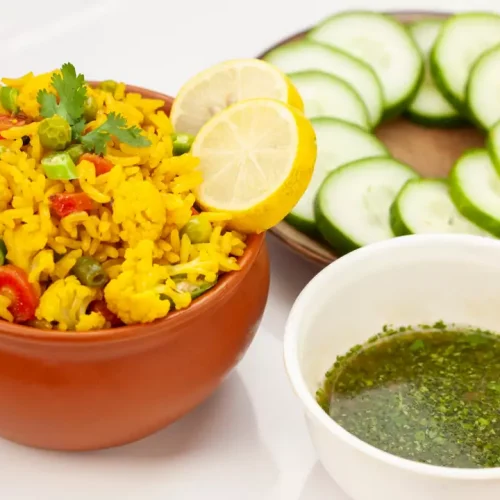
Vegetable Biryani recipe

Equipment
- Pressure Cooker
Ingredients
- 1 Cup Basmati Rice
- 2 Cups Water
- 2 tsp Ghee
- 2 tsp Cooking oil
- 3 Cloves
- 2 Peppercorns
- 1 Bayleaf
- 1 inch Cinnamon
- 1 Small Piece Nutmeg
- 1 Small Piece Javithri
- 2 Cardamon
- 1 inch Ginger
- 6 cloves Garlic
- 2 Green chillies
- 1/2 cup Carrot Peeled & Chopped
- 1/2 cup Beans Chopped
- 1/2 cup Green peas
- 1/2 cup Potato Peeled & Chopped
- 1 Big Onion Sliced
- 2 Tomatoes Chopped
- 1/2 tsp Red chilli powder
- 1/2 tsp Turmeric powder
- 1 tsp Briyani masala
- 1 tbsp curd
- Few Coriander leaves
- Few Mint leaves
- Salt to taste
Instructions
- Wash and soak the basmati rice in water for approximately 30 minutes. Drain and set aside.
- Heat cooking oil and ghee in a pressure cooker.
- Add the cloves, peppercorns, cardamom, cinnamon, bay leaf, mace, nutmeg and green chillies.
- Add the sliced onions and fry until soft. Add ginger-garlic paste and sauté for a minute.
- Add chopped tomatoes and cook until softened.
- Add turmeric powder, red chilli powder, biryani masala and salt. Mix well.
- Add curd and stir until combined.
- Add the chopped carrots, potatoes, beans and green peas. Sauté for 3 - 4 minutes.
- Add coriander leaves and mint leaves.
- Pour in 2 cups of water and bring to a boil.
- Add the soaked and drained rice. Allow the mixture to boil again.
- Close the pressure cooker and cook for 2 whistles on medium heat.
- Switch off the heat and allow the pressure to release naturally.
- Open the cooker, gently fluff the rice and serve hot.
- Serving suggestion: Enjoy this vegetable biryani with cucumber raita, onion salad or pickle.
