

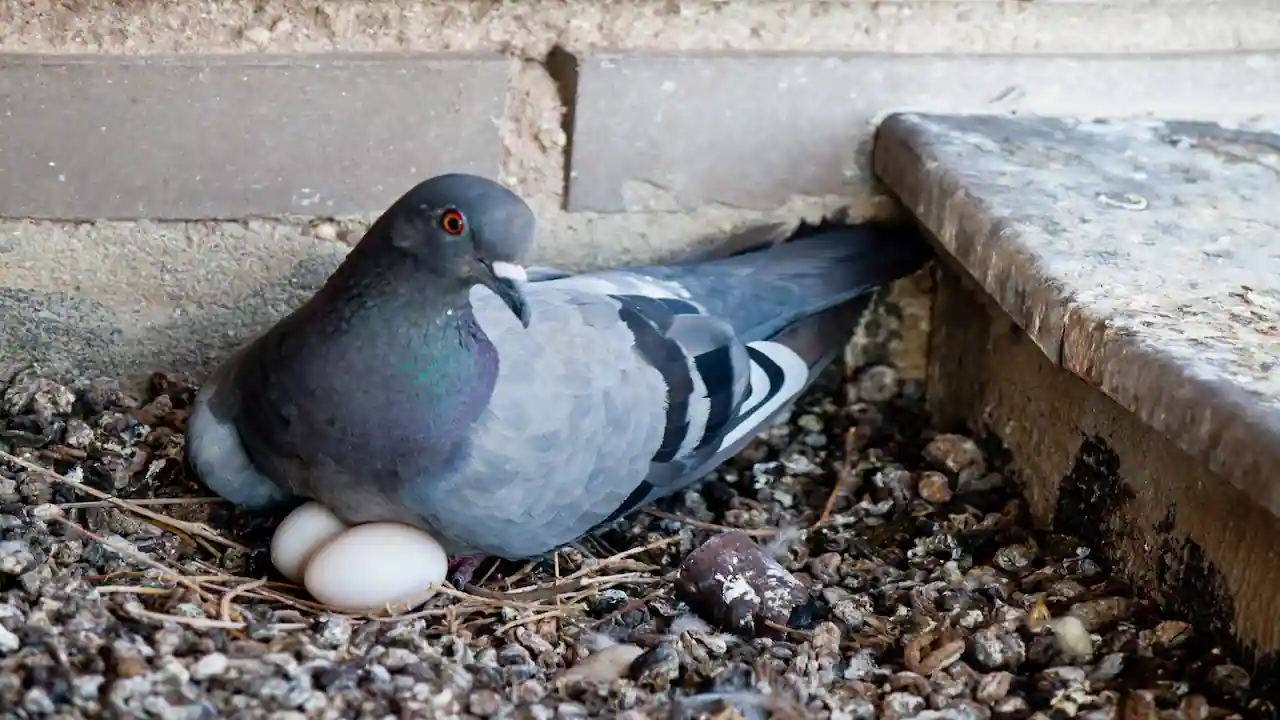
Pigeon eggs usually hatch in 17 to 19 days. Both parents incubate the eggs and feed hatchlings with crop milk after birth. Pigeon eggs and hatchlings are a fascinating part of urban wildlife that many people encounter on balconies, window ledges, rooftops, and quiet corners of buildings.
Unlike many birds, pigeons are extremely devoted parents. They carefully incubate their eggs and nurture their fragile chicks until they grow strong enough to survive.
If you’ve ever found a pigeon nest near your home, you may have wondered:
-
Do pigeons always return?
-
How long do their eggs take to hatch?
-
Can you touch pigeon eggs?
-
What should you do if you find them?
This complete guide will walk you through everything you need to know about pigeon eggs — from laying and fertility to hatching and caring for baby pigeons.
Do Pigeons Lay Eggs?
Yes, pigeons lay eggs regularly throughout the year.
Pigeons are monogamous birds, meaning they typically form long-term pair bonds. Once paired, they build simple nests using:
-
Twigs
-
Straw
-
Leaves
-
Small debris
You’ll often find pigeon nests on:
-
Window ledges
-
Balconies
-
Air conditioning units
-
Building corners
The female pigeon usually lays two eggs per clutch.
Both parents share incubation duties, taking turns keeping the eggs warm.
Read More: 7 Day Egg Diet Plan for Weight Loss
How Many Eggs Do Pigeons Lay?
Pigeons typically lay:
- 2 eggs per clutch
This is the standard number for healthy pigeons.
They can raise:
-
3 to 4 broods per year
-
Sometimes more in warm climates (like India)
This is why pigeons reproduce successfully in cities.
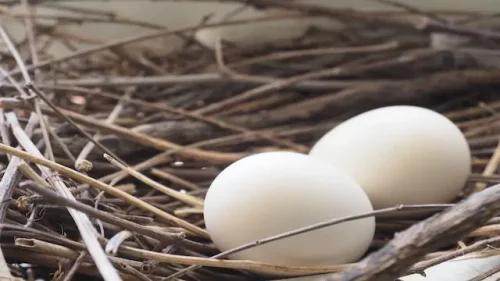
What Do Pigeon Eggs Look Like?
Pigeon eggs are:
-
Small
-
Smooth
-
Oval-shaped
-
Pure white
They are about:
- 3 cm long
Unlike many bird species, pigeon eggs usually do not have spots or color variations.
Their simple white appearance helps with identification.
How Long Do Pigeon Eggs Take to Hatch on a Balcony?
Pigeon eggs hatch in:
- 17 to 19 days
Both parents incubate the eggs by sitting on them to maintain warmth.
Ideal incubation conditions include:
-
Stable warmth
-
Minimal disturbance
-
Proper humidity
Temperature consistency is the key to successful hatching.
How Do You Know If a Pigeon Egg Is Fertile?
A fertile egg contains a developing embryo.
You can check fertility using a method called candling.
How to Candle a Pigeon Egg
Hold the egg in front of a bright light source.
If the egg is fertile, you may see:
-
Blood vessels
-
A dark central spot
If it appears:
-
Clear
-
Empty
It is likely infertile.
This check is usually done 5 to 7 days after laying.
Can You Touch Pigeon Eggs?
Yes, lightly touching pigeon eggs is generally safe.
Unlike common myths, pigeons:
❌ Do NOT abandon eggs due to human scent.
However, you should:
✔ Avoid frequent handling
✔ Avoid moving the eggs
✔ Keep disturbance minimal
The best practice is always to observe without interfering.
What Should You Do If You Find Pigeon Eggs?
Finding pigeon eggs on your balcony or window can be surprising.
Here are your options:
Option 1: Leave Them Alone (Best Choice)
Most of the time, parents will return.
Leaving them undisturbed allows nature to take its course.
Option 2: Monitor From a Distance
Observe quietly without touching.
Option 3: Do Not Remove Them Immediately
Removing eggs prematurely:
-
Can harm developing chicks
-
May violate wildlife protection laws in some areas
Once hatched and grown (about 4 to 5 weeks), pigeons usually leave.
How to Incubate a Pigeon Egg at Home
Artificial incubation should only be done if:
- The egg is abandoned
- Parents are missing
Incubation Requirements
-
Temperature: 37°C to 38°C (98.6°F to 100.4°F)
-
Humidity: 55 to 65%
-
Egg turning: 3 to 5 times daily
Stop turning:
- 3 days before hatching
Increase humidity to:
- 70 to 75% during final days
Consistency is crucial.
Pigeon Hatchlings: What Happens After Hatching?
Baby pigeons are called:
- Squabs
Unlike chickens, pigeon chicks are:
❌ Not able to walk immediately
❌ Not able to feed themselves
They are:
-
Blind
-
Featherless
-
Completely dependent on parents
What Do Baby Pigeons Eat?
Pigeon parents produce:
- Crop milk
This nutrient-rich secretion is fed directly to chicks.
Both parents feed the young.
After a few days, they introduce:
-
Soft seeds
-
Partially digested food
Chicks grow rapidly and leave the nest within:
- 4 to 5 weeks
Can You Eat Pigeon Eggs?
Yes, pigeon eggs are edible.
They are:
-
Small
-
Rich in flavor
-
Slightly oilier than chicken eggs
However, they are rarely consumed due to:
-
Their size
-
Limited availability
Most pigeon eggs are left for breeding purposes.
Can You Hatch Pigeon Eggs Without Parents?
Yes, but only with proper incubation.
A home incubator must provide:
-
Constant warmth
-
Proper humidity
-
Regular turning
Without these conditions, survival chances are low.
Why Do Pigeons Nest Near Humans?
Pigeons prefer:
-
Safe ledges
-
Sheltered corners
-
Stable environments
Urban buildings mimic natural cliff habitats.
This makes homes and balconies attractive nesting sites.
When Do Baby Pigeons Leave the Nest?
Pigeon chicks leave the nest at:
- Around 25 to 32 days
By this time they are:
-
Fully feathered
-
Able to fly short distances
-
Ready to feed independently
Should You Remove a Pigeon Nest?
If eggs are present:
🚫 Avoid removing the nest.
If no eggs or chicks are present:
- You may clean the area
- Install deterrents to prevent re-nesting
Final Thoughts
Pigeon eggs and hatchlings are a natural part of urban wildlife.
Understanding their nesting and hatching process helps us:
-
Respect nature
-
Avoid unnecessary disturbance
-
Support safe coexistence
In most cases, the best action is simple:
👉 Leave the nest undisturbed.
Within a few weeks, the chicks will grow and fly away, completing one of nature’s quiet but beautiful life cycles.
Read More: 4 Must-Try Dishes in Pigeon Forge: Indulge in the Flavors of Smokies
Conclusion
In conclusion, pigeon egg hatching and raising pigeons may be for you if you’re looking to add a new feathered friend to your home. They are low-maintenance, can be a profitable business, and make great pets. So long as you do your research and are prepared for the process, you can successfully pigeon egg hatching and even raise a flock of pigeons. If you’re up for the challenge, these unique birds can provide years of companionship.
FAQs About Pigeon Eggs
Q: How many eggs do pigeons lay?
A: Usually two per clutch.
Q: How long do pigeon eggs take to hatch?
A: 17 to 19 days.
Q: Can pigeons abandon eggs if touched?
A: No, light touching usually does not cause abandonment.
Q: What are baby pigeons called?
A: Squabs.
Q: Should I remove pigeon eggs from my balcony?
A: It’s best to leave them undisturbed.
